
Gentle. Specialized. Intentional.
Manual Lymphatic Drainage, commonly called MLD, is a specialized massage technique that uses very light, rhythmic movements to encourage the natural movement of lymph fluid through the body.
Unlike traditional massage, MLD does not focus on working deeply into muscles. Instead, it works with the superficial lymphatic system and follows specific pathways to encourage the movement of fluid.
MLD is most commonly used as part of care for lymphedema and other conditions involving swelling or impaired lymphatic drainage.
Because MLD is not appropriate for everyone, your first step is a brief consultation with our MLD therapist before scheduling your appointment. This allows us to review your health history and determine whether MLD is appropriate and safe for you.
What Is the Lymphatic System?
Your lymphatic system is a network of vessels, lymph nodes and tissues that plays an important role in fluid balance and immune function.
Lymph is a clear fluid that moves through this network, carrying fluid and certain substances away from tissues and eventually returning them to the bloodstream.
When the lymphatic system is damaged, disrupted or unable to adequately move fluid, fluid can accumulate in the tissues. This can result in swelling, heaviness, tightness and discomfort.
This is where Manual Lymphatic Drainage may be helpful for appropriate individuals.
What Is Manual Lymphatic Drainage?
Manual Lymphatic Drainage is a specialized technique designed to encourage lymph fluid to move through functioning lymphatic pathways.
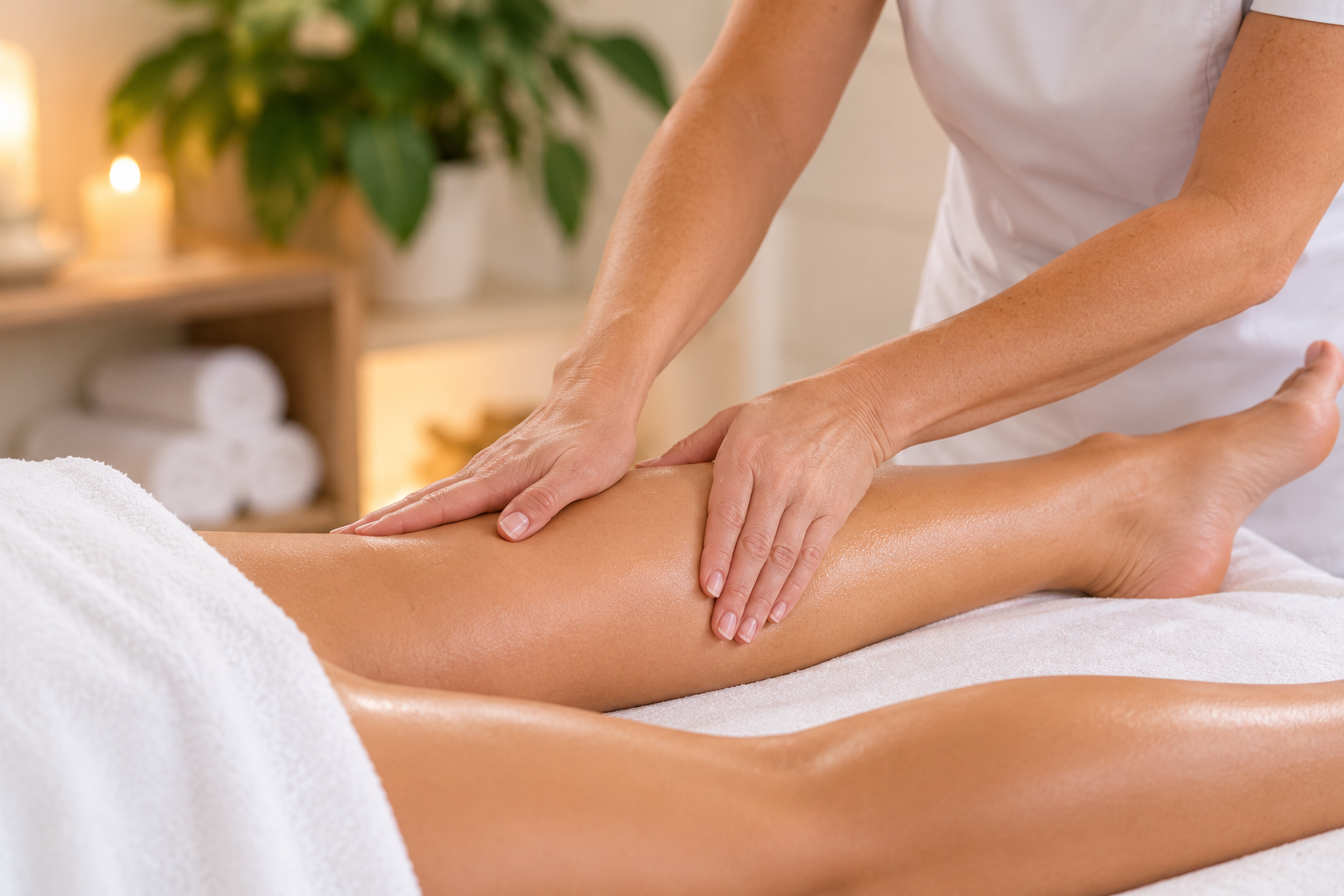
The therapist uses slow, rhythmic movements and gentle stretching of the skin rather than deep pressure.
MLD follows specific sequences based on the body’s lymphatic pathways. Your therapist may begin by working in areas such as the neck, chest, abdomen, armpits or groin before addressing areas where swelling or fluid accumulation is present.
The treatment is individualized because your lymphatic system and your health history are unique to you.
How Is MLD Different From a Traditional Massage?
This is one of the most common questions—and an important distinction.
A traditional massage may focus on muscles, fascia and soft tissue. Depending on the type of massage, the therapist may use kneading, compression, stretching or deeper pressure to address muscle tension and discomfort.
Traditional Massage
- May use moderate to firm pressure
- Often works with muscles and soft tissue
- May address muscle tension and soreness
- Techniques vary depending on the type of massage
- Can feel deep or therapeutic
Manual Lymphatic Drainage
- Uses very light pressure
- Works with the superficial lymphatic system
- Encourages lymphatic fluid movement
- Follows specific lymphatic pathways and sequences
- Gentle, slow and rhythmic
MLD isn’t simply a “lighter massage.”
It is a specialized technique requiring additional training and an understanding of lymphatic anatomy and physiology.
What Happens During an MLD Session?
Your therapist will begin by considering your individual needs and the reason you are seeking MLD.
Rather than immediately working on the area that appears swollen, MLD generally begins by preparing functioning lymphatic pathways. Your therapist then uses specific, gentle movements to encourage fluid from areas of accumulation toward available lymphatic pathways.
The treatment may include areas that aren’t swollen or uncomfortable.
That’s intentional.
MLD isn’t simply about massaging the place where you see swelling. The therapist is following the pathways of the lymphatic system and creating a route for fluid to move.
The exact sequence and areas treated will depend on your individual needs and health history.
What Conditions May Benefit From MLD?
Manual Lymphatic Drainage may be appropriate for people experiencing swelling, fluid accumulation or impaired lymphatic drainage related to certain medical conditions, surgeries or injuries.
MLD is most established as part of treatment for lymphedema, including lymphedema that may develop following cancer treatment or lymph-node removal.
Depending on your individual circumstances and the therapist’s training, MLD may also be used as part of care for:
- Lymphedema
- Swelling following certain surgeries
- Post-traumatic swelling or injuries
- Lipedema
- Chronic venous insufficiency
- Certain inflammatory or rheumatic conditions
- Swelling associated with some medical treatments
Some people may also seek MLD because they enjoy its exceptionally gentle and calming nature.
However, MLD is not appropriate for every type of swelling or every medical condition. The cause of swelling matters, which is why we review your health history before scheduling your first treatment.
Can MLD Help With Swelling After Surgery?
MLD may be incorporated into postoperative care when appropriate, particularly when surgery or cancer treatment has affected the lymphatic system.
For example, lymph-node removal during cancer treatment can interfere with normal lymphatic drainage and may contribute to lymphedema.
However, every surgery is different.
If you are considering MLD after surgery, your therapist will want to know what procedure you had, when you had it and how you are healing. Medical clearance may be appropriate depending on your circumstances.
Is MLD a Detox Treatment?
No—not in the way the word “detox” is commonly used. You may see claims online that lymphatic massage “flushes toxins,” “cleanses the body” or “boosts the immune system.” We prefer to keep things evidence-based.
Your lymphatic system certainly has important roles in fluid balance and immune function, but MLD should not be marketed as a treatment that removes unspecified “toxins” from an otherwise healthy body.
The primary purpose of MLD is to encourage lymphatic fluid movement and help manage swelling or impaired lymphatic drainage when appropriate.
Can MLD Help Me Lose Weight?
MLD is not a weight-loss treatment. Some people may notice temporary changes in puffiness or fluid retention after treatment. That is not the same thing as losing body fat. MLD should not be used or promoted as a method for weight loss.
How Do I Know If MLD Is Right for Me?
You don’t have to figure that out on your own.
Before you schedule your first MLD appointment, our MLD therapist will contact you for a brief health history.
During this conversation, we will discuss:
- Why you are interested in MLD
- Any recent surgeries or procedures
- Injuries or significant swelling
- Relevant medical conditions
- Medications
- Other factors that may affect whether MLD is appropriate
This conversation allows the therapist to determine whether you appear to be a good candidate for treatment or whether you should first speak with your healthcare provider.
Your safety comes first.
Are There Reasons Someone Should Not Have MLD?
Although MLD is extremely gentle, it is not appropriate for everyone.
Certain conditions may require MLD to be postponed, avoided or performed only with medical guidance. These can include situations such as:
- Active infection
- Suspected or confirmed blood clot
- Certain heart conditions
- Certain kidney conditions
- Certain types or stages of cancer
- Significant unexplained swelling
- Other medical conditions where moving additional fluid could be unsafe
This is why a health-history consultation is required before your first MLD appointment.
If you have sudden or unexplained swelling, redness, warmth, significant pain or other concerning symptoms, please seek medical evaluation rather than scheduling an MLD session to determine the cause.
Who Performs Manual Lymphatic Drainage?
MLD is a specialized technique that requires training beyond a general massage education. Our MLD therapist has specialized training in lymphatic drainage techniques and understands that MLD is not a one-size-fits-all treatment. Your treatment will be based on your individual needs, health history and the reason you are seeking MLD.
What Should I Expect Before My First Appointment?
First, we’ll talk.
Before you schedule your first MLD session, your therapist will contact you for a brief consultation.
Then, we’ll determine whether MLD is appropriate.
We’ll review your health history and discuss your reason for seeking treatment.
Then, if MLD is appropriate, we’ll schedule your session.
This extra step is intentional.
We don’t believe everyone who asks for MLD should automatically receive MLD. We believe you should first know whether it’s appropriate for you.
Why Choose MLD at Blue Ridge Wellness & Massage?
Because specialized care should begin with listening—not simply booking an appointment.
MLD is different from a traditional massage, and we treat it that way. Your session is approached thoughtfully, gently and with respect for the complexity of the lymphatic system. Before your first treatment, we take the time to understand your health history and why you are seeking MLD.
Our goal isn’t to promise everything MLD can do. Our goal is to provide the right treatment, for the right person, for the right reason.
Have Questions About MLD?
If you’re wondering whether Manual Lymphatic Drainage may be appropriate for you, you don’t have to figure it out yourself.
Before your first appointment, our MLD therapist will speak with you about your health history and answer your questions.
Contact us to begin the conversation.